











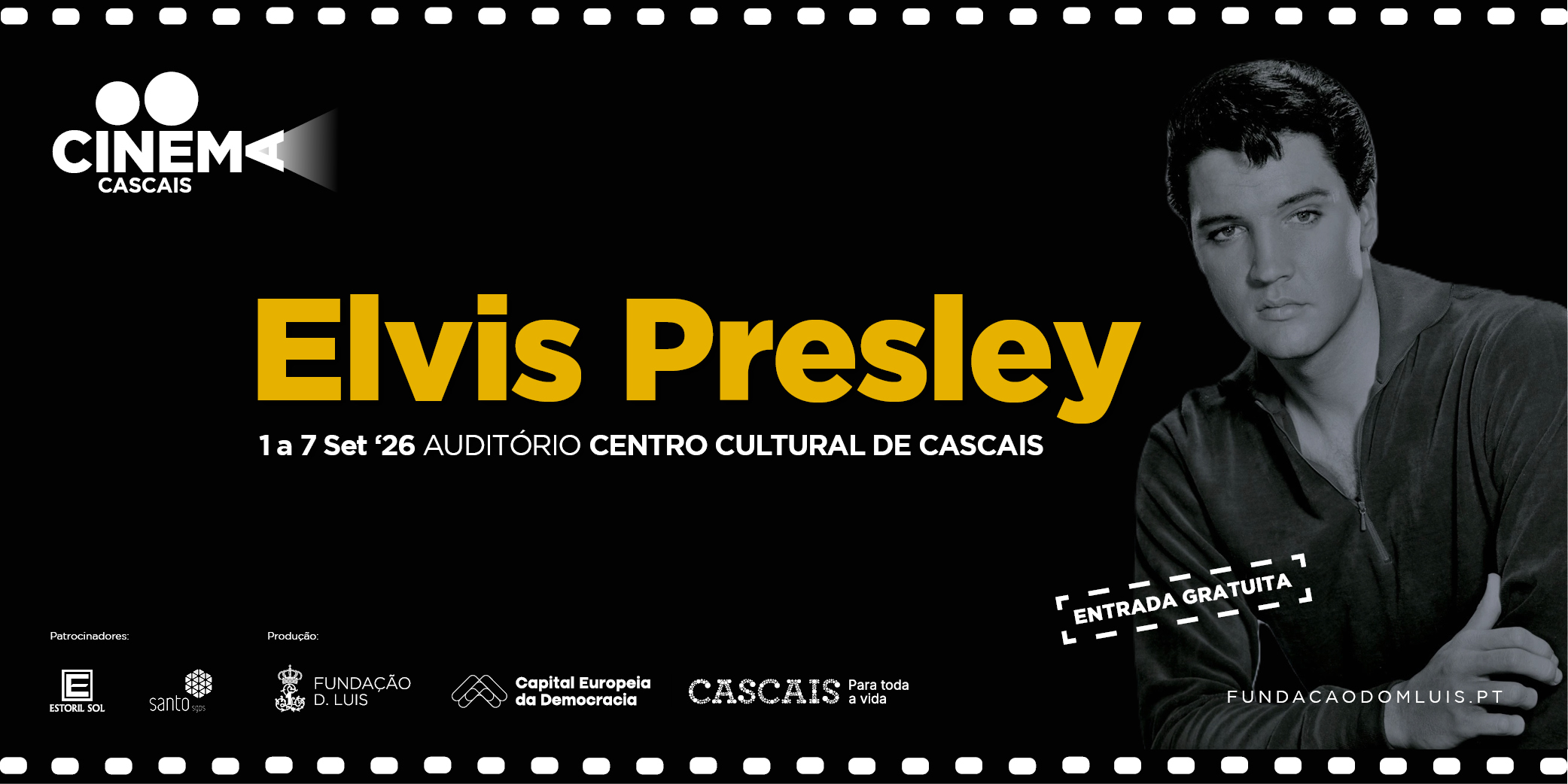





















































































































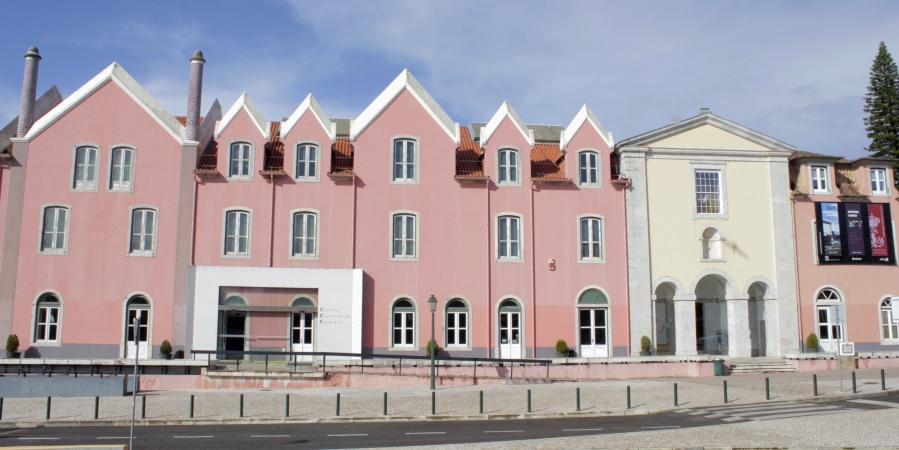
Elvis Presley Film Series, as part of the “Becoming Elvis” exhibition
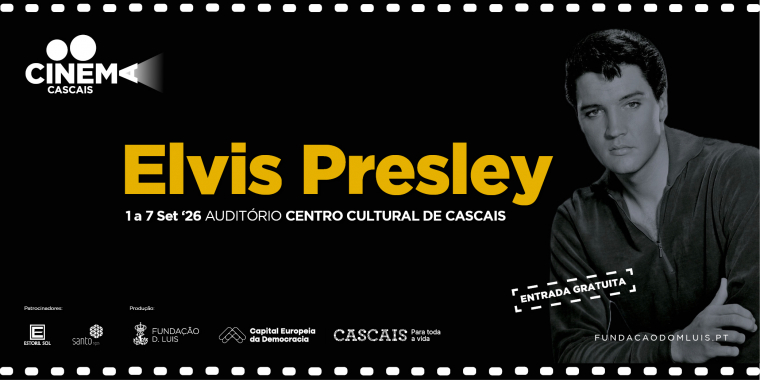
Elvis on the Big Screen
Elvis Presley’s career in American cinema represents a unique chapter in U.S. popular culture during the 1950s and 1960s. Although he achieved worldwide fame primarily as a singer and rock-and-roll performer, Elvis also sought to build a film career that would broaden his public profile and solidify his image as an icon of mass entertainment. The films *Jailhouse Rock* (1957), *King Creole* (1958), *G.I. Blues* (1960), *Blue Hawaii* (1961), *Girls! Girls! Girls! (1962), Roustabout (1964), and Paradise, Hawaiian Style (1966)—which are being screened by the D. Luís I Foundation in the Auditorium of the Cascais Cultural Center—offer a glimpse into the evolution of that career.
In his early years in Hollywood, Elvis starred in films that sought to explore his dramatic talent and the rebellious energy associated with rock and roll. *Jailhouse Rock* tells the story of a troubled young man who finds a path to success through music. The film became iconic for its famous musical sequence featuring the title song, often considered one of the most influential in the history of musical cinema.
Meanwhile, *King Creole*, directed by Michael Curtiz—a filmmaker with a body of work filled with hits—is generally regarded as one of Elvis’s finest performances as an actor. The film portrays a young man entangled in family conflicts and the world of crime, revealing a more complex dramatic dimension than that which would characterize many of his later films.
After his military service, Elvis’s film career entered a new phase: *G.I. Blues* marked the beginning of a formula that would prove extremely lucrative—lighthearted stories, exotic settings, uncomplicated romances, and a wealth of musical numbers. The protagonist, an American soldier stationed in Europe, allowed Elvis’s patriotic image to be linked to his popularity as a singer.
This formula reached one of its greatest successes with *Blue Hawaii*. The film features idyllic landscapes, laid-back music, and a simple romantic narrative, establishing a model that would be explored in several subsequent productions. The film’s enormous commercial success demonstrated that audiences sought in Elvis’s films—more than demanding dramatic performances—a lighthearted and optimistic entertainment experience.
Movies like *Girls! Girls! Girls!* further this trend. The narrative focuses on romantic and musical adventures, serving primarily as a vehicle for new songs and for maintaining the artist’s charismatic image. Similarly, *Roustabout* features Elvis as part of a traveling circus, combining music, romance, and comedy. Although critics often considered these productions predictable and lacking in artistic merit, they remained highly popular with audiences and helped drive sales of the accompanying soundtracks.
For its part, *Paradise, Hawaiian Style* highlights the limitations of the formula adopted by the studios. Produced at a time when the film and music markets were beginning to change rapidly, the film revisits elements already explored in *Blue Hawaii*: tropical settings, a romantic plot, and a strong musical presence. However, the repetition of themes and situations reveals a certain artistic stagnation that would ultimately affect Elvis’s cinematic reputation during the second half of the 1960s.
Overall, Elvis Presley’s film career illustrates the close relationship between the music industry and the film industry in postwar American mass culture. His early films demonstrate dramatic potential and contribute to the legitimization of rock and roll on the big screen. His later productions, however, focused on commercial entertainment, transforming Elvis into a recognizable and profitable brand. Although many of his films are not considered significant works of American cinema today, they played an important role in spreading his image and helped cement Elvis Presley’s status as one of the greatest icons of 20th-century popular culture.
More information HERE.
Organized by: D. Luís I Foundation, with support from the Cascais City Council
Free admission.