






































































































Recital – Lecture: “Fernando Lopes-Graça on the 120th Anniversary of His Birth” and presentation of the book/CD: “Modernism and Folklore in the Piano Music of Fernando Lopes-Graça”
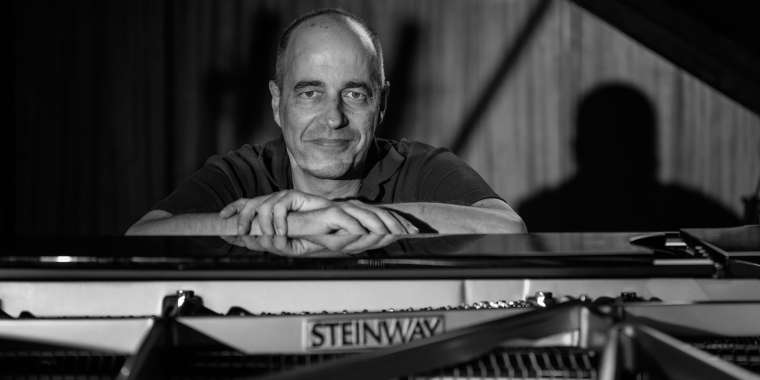
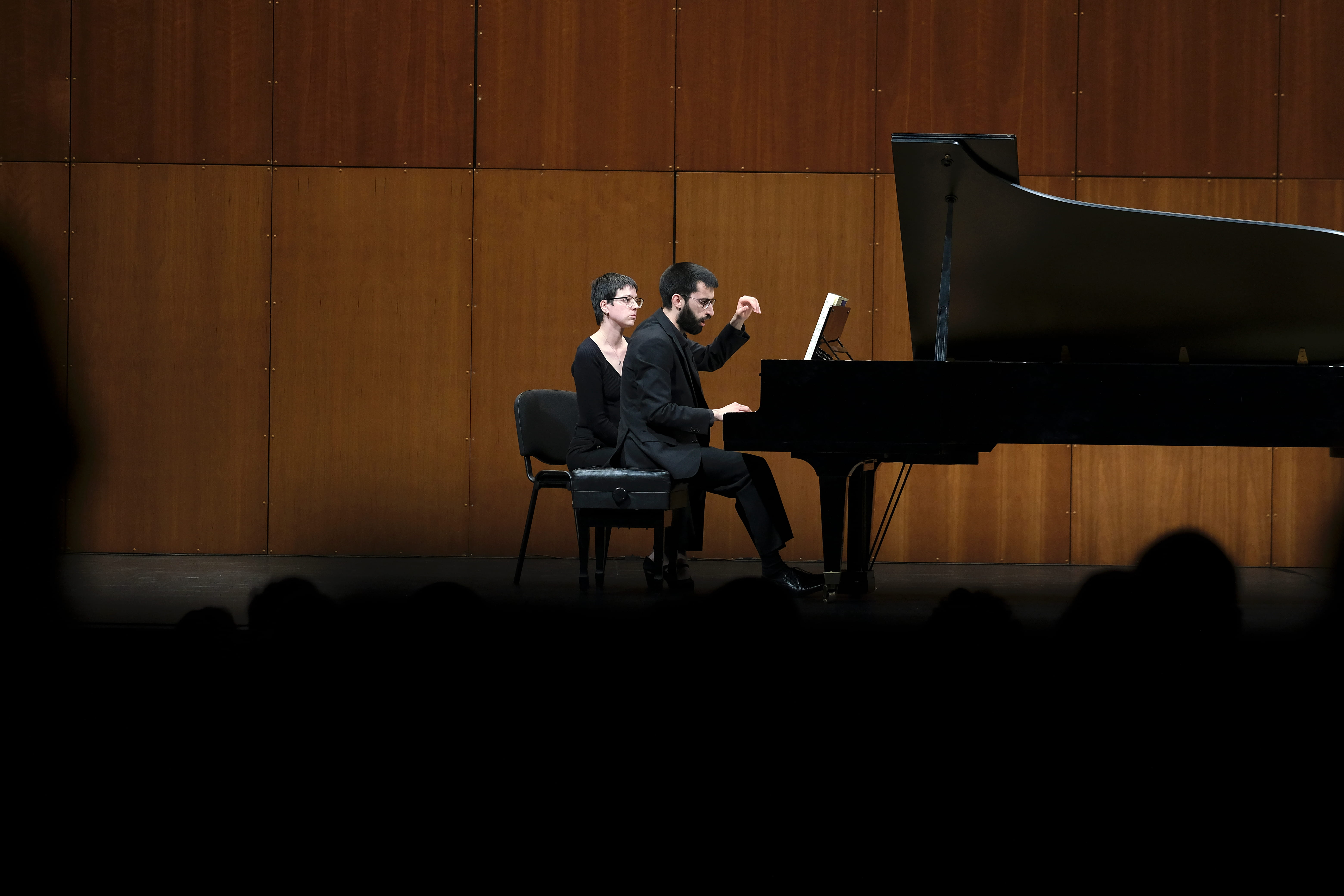
In this era of regressive amnesia, Miguel Borges Coelho and Daniel Moreira revisit the piano works of Fernando Lopes-Graça, navigating the space between modernism and the historical consciousness that—particularly through what he termed “authentic folklore”—so often fueled his work.
Performance and commentary intertwine in a recital-lecture organized around two cycles. The first, “Eight Bagatelles” (1938–1950), constitutes a veritable laboratory of the composer’s modernist language; “Eleven Glosas” (1950), the second, roots it—amidst light and shadow—in the memory of Portuguese folk songs that serve as the theme for each of its eleven pieces.
The occasion is the launch of the book-and-CD set “Modernism and Folklore in the Piano Music of Fernando Lopes-Graça”, whose text centers on these two cycles while also referencing the works that round out the recording “Second Sonata”, “Three Lullabies”, and “Festive Music No. 18: For Miguel Borges Coelho’s 18th Birthday”.
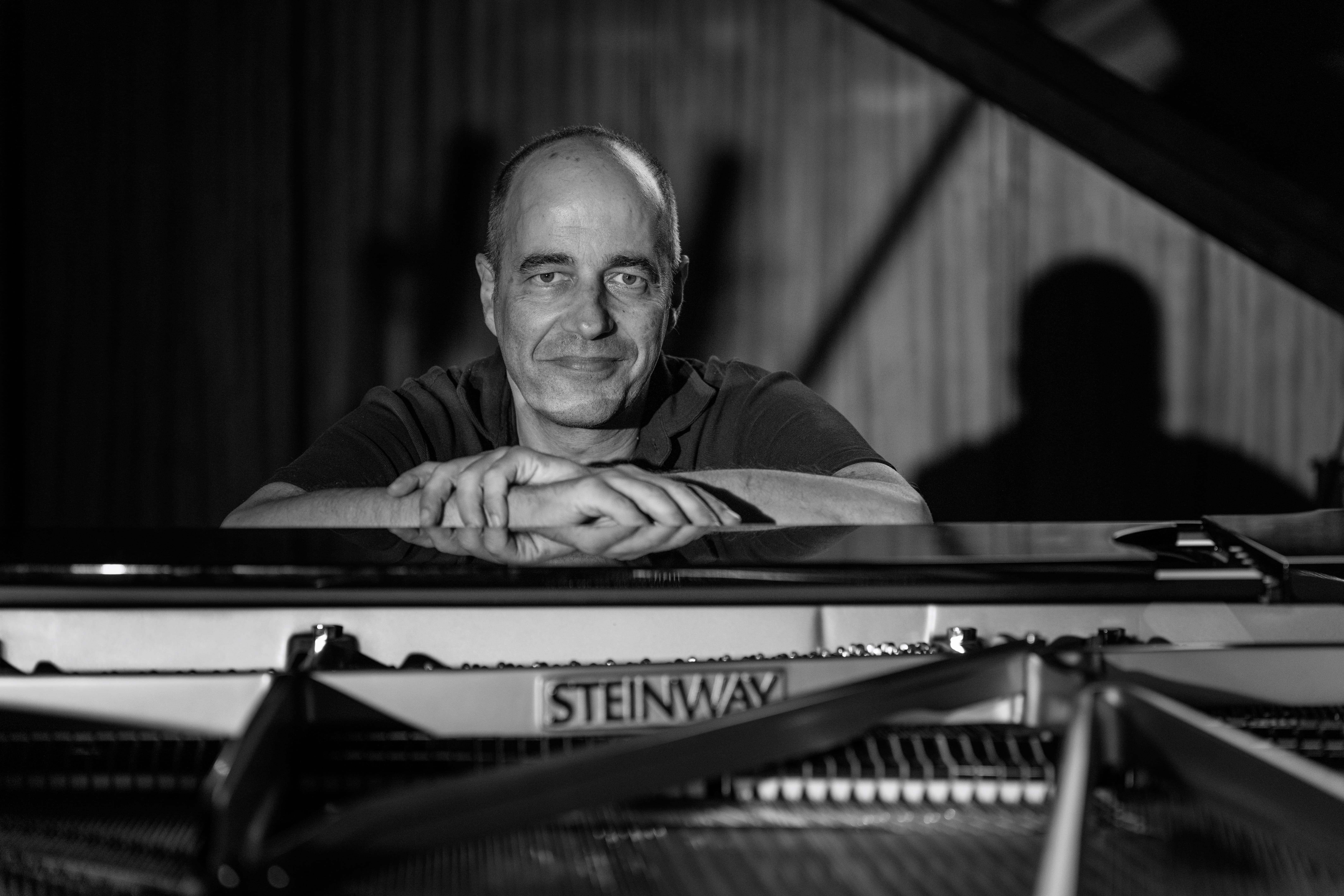
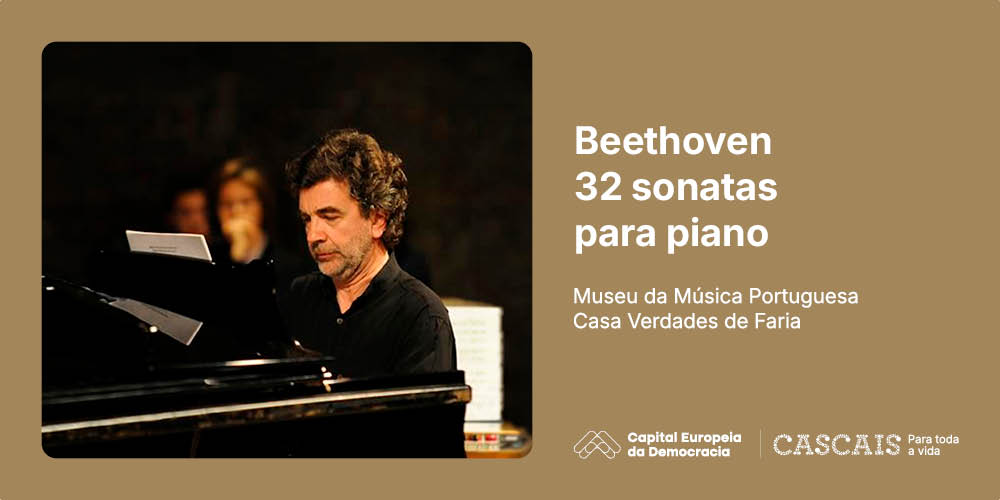
- Miguel Borges Coelho - piano
- Essays by Daniel Moreira & Miguel Borges Coelho
Free admission, subject to venue capacity
Information and Reservations: 214 815 904 or mmp@cm-cascais.pt
Organized by: Cascais City Council | Supported by: DGARTES
Fernando Lopes-Graça (1906–1994)
Eight Bagatelles (1938–1950)
Eleven Glosas (1950) Biography
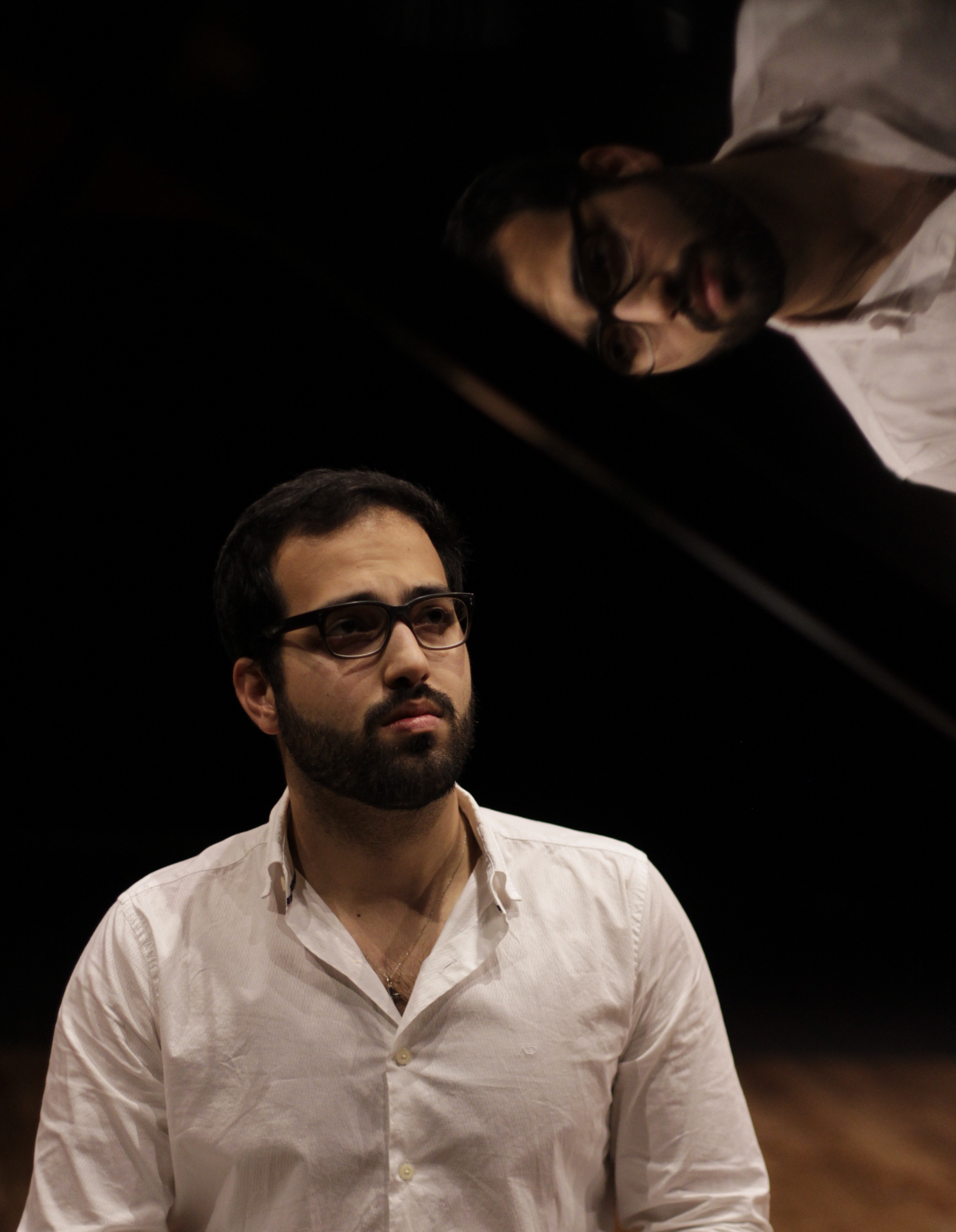
Miguel Borges Coelho is a piano professor at the Higher School of Music and Performing Arts (ESMAE) and a research fellow at CEIS20.
He has performed at such prestigious venues as the Rudolfinum (Prague), the São Carlos Theater, and the major concert halls of the CCB, Gulbenkian, Euskalduna (Bilbao), Kursaal (San Sebastián), and Baluarte (Pamplona), as well as at festivals such as the Festa da Música, Folles Journées (Nantes), Quincena Musical (San Sebastián), and Musika/Música (Bilbao). He has appeared as a soloist with the Prague Chamber Orchestra, the Gulbenkian Chamber Orchestra, the Lisbon Metropolitan Chamber Orchestra, the Euskadi Symphony Orchestra, and the Portuguese Symphony Orchestra, among many others. He performs regularly with Marta Zabaleta and has also played with musicians such as Pedro Burmester, Afonso Fesch, Paulo Gaio Lima, Michal Kanka, Asier Polo, Filipe Quaresma, Gerardo Ribeiro, Pedro Ribeiro, António Rosado, António Saiote, and the Capela, de Matosinhos, Prazak, Talich, and Wihan quartets. He has given world premieres of works by Lopes Graça and J. Pedro Oliveira. He recorded a double CD featuring works by J. Peixinho (Numérica) and, in collaboration with M. Kanka or the Prazak Quartet, four CDs for the Praga Digitals label, featuring works by Weinberg (Choc Disc for the magazine “Le Monde de la Musique”), E. Bloch, R. Strauss, and A. Tcherepnin.
He began his piano studies with Amélia Vilar and continued his training at the Porto Conservatory of Music with Isabel Rocha. As a Gulbenkian Foundation scholarship recipient, he studied with V. Margulis at the Hochschule für Musik Freiburg and with D. Bashkirov and G. Egyazarova at the Escuela Superior de Música Reina Sofía. He holds a Ph.D. in Musicology from the University of Évora. He won second prize at the 14th Porto International Music Competition and the “Ribeiro da Fonte” New Talent Award from the Ministry of Culture (1998).
Daniel Moreira is a composer and music researcher. Interdisciplinarity characterizes both his artistic and academic work, with a special focus on the relationship between music and film. He holds a Ph.D. in Composition from King’s College London (2017) and a master’s degree in Composition from ESMAE (2010), having studied with George Benjamin, Fernando Lapa, Dimitris Andrikopoulos, and Carlos Guedes. In 2009, he was a Young Composer in Residence at Casa da Música, and he is regularly commissioned to compose new works by institutions such as Casa da Música, the Festival Musica Strasbourg, the European Concert Hall Organisation, MPMP, the Kölner Philharmonie, and Batalha Centro de Cinema. His work spans multiple genres, with a special emphasis on the interaction between acoustic instruments and electronics and on multidisciplinary approaches in the fields of music for film and television, opera, and various genres of vocal music. Among his most representative works are the opera *Ninguém & Todo-o-Mundo* (2018); *Isto não é um filme* (2020), for orchestra, electronics, and lighting design; *Vórtice: para o fim de um tempo* (2022), for small ensemble, electronics, and lighting design; music for the silent film *Os Faroleiros* (2022), premiered by the Arditti Quartet; *A Madrugada* (2024), for two choirs, orchestra, and electronics, based on poems by Sophia de Mello Breyner; music for the television series *Cortina Vermelha* (2023–25); and an ongoing project commissioned by Drumming GP, with music for percussion quartet and electronics intended to accompany four animated films. He is an adjunct professor at ESMAE (Porto Polytechnic), where he teaches courses in music analysis, composition, and film music, and a researcher at CEIS20 (University of Coimbra). His academic research focuses on film music, and he has published several articles on Bernard Herrmann’s soundtracks in leading scholarly journals (Music Analysis, 2021; Journal of Film Music, 2022; Music Theory Online, 2025).